
Odisha Vision 2036: Can Odisha be among the Top Ten States of India?
Despite one of the fastest growing states of the country, Odisha continues to figure disproportionally in all deprivation indicators. The budgetary allocation in critical social sectors has been continued to be negligible without any proper policy target and time frame.
Odisha as a state will complete 100 years of its existence in 2036. It is time to review the state’s progress and set roadmaps for the coming days and realize the dreams of many of the makers of modern Odisha. The challenges are many but a question that always props up in mind is, can Odisha find a place among the top ten developed states of India by 2036? Let us take some of important development indicators to examine the current position of Odisha in the country. The following indicators, namely, Average Life Expectancy, Infant Mortality Rate (IMR), Maternal Mortality Rate (MMR), Per Capita Income (PCI), Education, Urbanization, and Industrialization, can be taken into consideration to assess the state’s position vis-à-vis other states of the country.
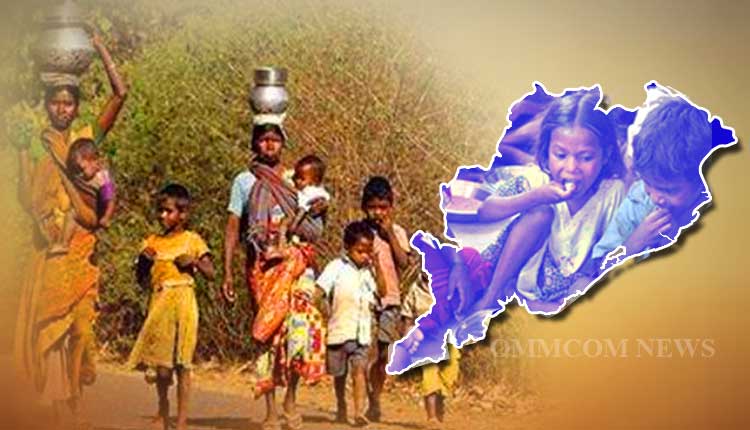
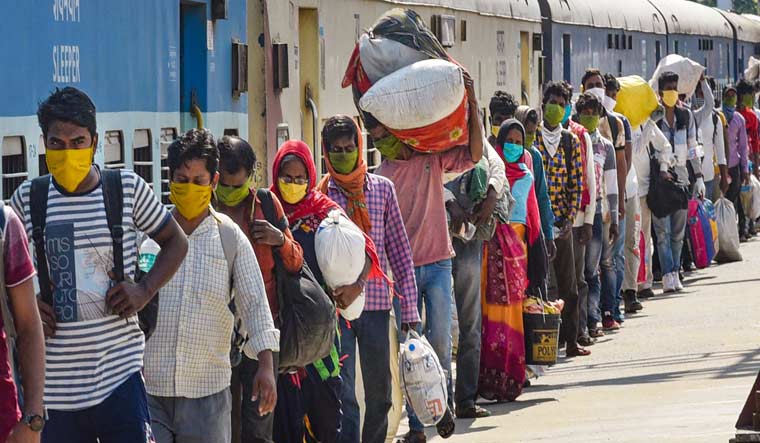
It is unfortunate that Odisha continues to be in the bottom of the rank in almost all development indicators. The state continues to be one of the poorest states of the country, with nearly one-third of its population below the poverty line. This gets reflected in the other indicators of wellbeing. Odisha is one of the most backward states in terms of quality healthcare, education and access to basic amenities. The low per capita income and low minimum wage continue to push million to work as a distress migrant worker in the urban conglomerates in a pitiable condition. It also continues to depend on agriculture and allied sectors without much improvement in manufacturing and industrial sector in spite of many natural advantages.
The healthcare and education are vital for the human resource development as it can create many positive externalities in the economy and polity. However, despite it being the state subject, one does not see much improvement in the various indicators associates with it. The Sample Registration System (SRS), 2018 shows that Odisha had one of the highest infant mortality rates of 40, higher than the national average of 32, and way higher than states like Kerala (7) and Nagaland (4). It is found that backward states having a greater number of people below poverty line also have poor health and educational infrastructure as poverty has a close link with the latter. In case of Odisha, the health and education status of a big chunk of population comprising mostly STs, SCs and OBCs is more precarious than other social groups. The SRS report further shows that life expectancy at birth in Odisha is also below national average. It was 75 in Kerala and Delhi, 69.4 in India and 69.3 in Odisha. Similarly, the NITI Aayog report on School Education Quality Index (SEQI) shows a sorry state of education in the state with a score of only 48.36 quite below the best performing state like Kerala (76.3). The education infrastructure, especially the public one, is way below the national average and one does not see any radical attempt coming from the government to improve its quality.
The per capita income of Odisha is also well below the national average with Rs 1,19,075, ranked at 22 positions out of 33 states and union territories. Despite one of the fastest growing states of the country, Odisha continues to figure disproportionally in all deprivation indicators. Moreover, the universal health and education delivery system discriminate against the poor and marginalized social groups. The budgetary allocation to these important sectors has been continued to be negligible without any proper policy target and time frame. The availability of District Mineral Fund (DMF) has not been amicably used to address the basic human necessities such as education, health, electricity, water and sanitation in the adivasi dominated mining areas as this group continue to remain in the bottom of all development indicators.
Coming to urbanization, the Ministry of Housing and Urban Affairs data shows that none of the city in Odisha is among the metropolitan cities having million plus population though it has increased from 35 to 53 as per 2011 census. The urbanisation process in the state continues to grow at snail pace as one compares it with other Indian states. Similar is the case of industrialization. In spite of many natural advantages, such as a vast sea coast area and huge mineral resources, Odisha continues to remain backward in industrialization. As we know, Odisha is a storehouse mineral wealth; even many strategic minerals such as Bauxite, Chromite, iron ore and coal are available in large quantities. But then why these resources not being utilized for industrialization? Why there is a lack of employment opportunities for which many people are forced to migrate to find work in other states?
In the globalised world, information and communication technology has emerged as one of the important areas of development along with the conventional means of transportation. Let us examine Odisha’s position using five important aspects, such as, internet connectivity, road communication, railway coverage, airport and seaport and inland water transport. How do we visualize Odisha in 2036 especially on these aspects? While the world is entering into increasingly online activities and India has become second largest online market behind China, Odisha remains at the bottom of all Indian states when it comes to internet penetration as revealed in a survey by the Internet and Mobile Association of India in 2019. In one of its kind moves, the Government of Kerala has provided free internet facilities to 20 lakh BPL families. The lower status and slow progress of Odisha may have many reasons but how to overcome it and move at par with others is a challenge.
Though India has the second largest road network in the world behind the USA and currently with an average rate of 30 km road built per day, still the road networking coverage is uneven in India. Odisha is among ten States, like Maharashtra, UP, Rajasthan, AP, Karnataka, TN, MP, Bihar and Gujarat, having longest roads and length of National Highways. But in terms of length of state highways, Odisha is not among top ten states. Road networks are the lifeline of public transport and delay in building the primary infrastructure has a bearing on public life and livelihood.
The railways have always played an important role in modernisation process of any country. That is why it has been seen that the railway establishments in the world are mostly nationalized. Economically developed countries such as the USA, China and Russia are ahead of India in terms of network size. Railway coverage in Odisha has been a matter of concern as it continues to be neglected by the Centre in expanding the railway network within the state. The fact is that even some districts in Odisha have no railway line. This has contributed to economic backwardness and regional imbalances in economic growth. The Indian Railways is one of the largest employers in the world providing direct benefit to the states with more connectivity. The states having less railway line have lower level of employment and economic activities. Compare to the other states, Odisha has just 2,461 km route which is less than Bihar and the West Bengal. The East Coast Railway having its headquarters in Bhubaneswar since 2003 has covered almost all parts of Odisha and this zone has been contributing sizable revenue but the Railway Ministry does not reciprocate in the same way to the railway expansion work in Odisha. The inordinate delay in completion of many ongoing projects and initiation of new projects has been a matter of huge public discontent in the state.
Let us see the status of airports, seaports and inland waterways in Odisha which are emerging as key factors in current days for public mobility, transportation, business, export and import and many other works of economic significance in an increasingly globalized and liberalized world. Kerala has highest density of international airport with four international airports out of 34 in India. The ten busiest airports in the country are located in Delhi, Maharashtra, Karnataka, West Bengal, Andhra Pradesh, Gujarat, Goa and Kerala. Out of these, four airports are listed among top 100 airports of the world. The Beijing International Airport of China is the biggest airport of the world. Odisha has only one international airport and 18 airstrips.
Odisha has one of the highest coastlines with 480 km in the country. The Paradeep seaport is listed as one of the 12 major ports in the country. Added to this, there are more than 200 minor ports in the coastal states including 14 ports of Odisha. Gujarat, TN, AP, Maharashtra and Kerala have higher length of coastline than Odisha and therefore they have more natural advantages but many of their small ports have been developed recently due to political will power and support of the Central Government. The whole range of areas from Talasara of Baleswar district to Bahuda Muhana of Ganjam district, there are about 15 locations which can be developed into small ports and corridors of export and import linking to two major developed ports of neighbouring states. But the long pending costal highway is still being delayed. Odisha has been consistently neglected by the Centre and the Central leadership. Moreover, it has been apathetic to the development of Odisha whereas the state continues to contribute all its natural resources for national development.
Along with seaport, the waterways can also be of great advantage for communication and transport. The National Waterways of 14,500 km has been operational over river system of Maharashtra, Gujarat, UP, Bihar, WB, Jharkhand, Goa, Kerala, Assam, AP, Telangana, Chhattisgarh, TN and Karnataka. However, in Odisha though the Mahanadi riverine port and a number of waterway projects have been planned over the river system by the Inland Waterways Authority of India, but none of the project has yet been grounded. The development of seaports and waterways will boost Odisha’s economy. Six coastal districts like Baleswar, Bhadrak, Kendrapada, Jagatsingpur, Puri and Ganjam can be directly benefitted. The ambitious Sagaramala project with 100 per cent direct foreign investment, and plan for coastal economic zones and highways in the coastal areas may be used to end the continued backwardness of Odisha.
From the aforementioned discussion it can be said that Odisha needs a sound economic policy and, more importantly, a political will to find a place in the top ten states of the country.
(Manas Jena is a socio-political activist and freelance writer based in Bhubaneswar. He can be reached at manasbbsr15@mail.com)

Leave a Reply