

SC Upholds Changes to SC/ST Atrocities Law
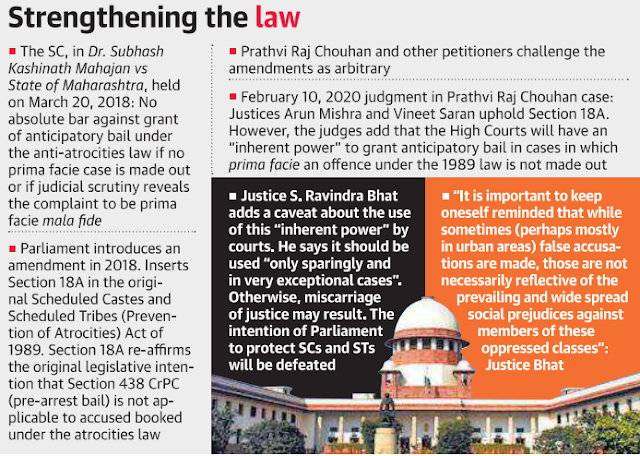
On February 10, 2020, the Supreme Court of India upheld the constitutional validity of the Scheduled Castes and the Scheduled Tribes (Prevention of Atrocities) Amendment Act, 2018. This decision reinforced the stringent provisions of the original 1989 Act, aiming to protect marginalized communities from discrimination and violence. Background: March 20, 2018 Judgment: The Supreme Court had issued a ruling that introduced safeguards to prevent the alleged misuse of the SC/ST Act. Key directives included: Allowing anticipatory bail if no prima facie case was established. Mandating a preliminary inquiry before registering an FIR. Requiring approval from senior officials prior to arresting public servants. These measures were intended to protect individuals from false accusations but were perceived by many as diluting the Act’s effectiveness. Public Response: The 2018 judgment led to widespread protests across India, with critics arguing that it weakened protections for SC/ST communities. In response to the public outcry, the government enacted the 2018 Amendment to restore the original provisions of the Act. Key Provisions of the 2018 Amendment: Eliminated the requirement for a preliminary inquiry before filing an FIR under the Act. Removed the need for prior approval before arresting individuals accused under the Act. Reinstated the bar on anticipatory bail for offenses under the Act. Supreme Court’s 2020 Ruling: The Court upheld the 2018 Amendment, emphasizing that: Anticipatory bail should only be granted when a prima facie case is not established. A preliminary inquiry is not mandatory before registering an FIR. Approval from senior officials is not required for arrests under the Act. Justice Ravindra Bhat, in a concurring opinion, highlighted the importance of treating all citizens equally and fostering fraternity. He cautioned that liberal use of anticipatory bail could undermine the Act’s purpose. This ruling underscores the judiciary’s recognition of the persistent challenges faced by SC/ST communities. By upholding the 2018 Amendment, the Supreme Court reinforced the legislative intent to provide robust protections against atrocities and discrimination.
On February 10, 2020, the Supreme Court of India upheld the constitutional validity of the Scheduled Castes and the Scheduled Tribes (Prevention of Atrocities) Amendment Act, 2018. This decision reinforced the stringent provisions of the original 1989 Act, aiming to protect marginalized communities from discrimination and violence.
Background:
March 20, 2018 Judgment: The Supreme Court had issued a ruling that introduced safeguards to prevent the alleged misuse of the SC/ST Act. Key directives included:
- Allowing anticipatory bail if no prima facie case was established.
- Mandating a preliminary inquiry before registering an FIR.
- Requiring approval from senior officials prior to arresting public servants.
These measures were intended to protect individuals from false accusations but were perceived by many as diluting the Act’s effectiveness.
Public Response:
The 2018 judgment led to widespread protests across India, with critics arguing that it weakened protections for SC/ST communities. In response to the public outcry, the government enacted the 2018 Amendment to restore the original provisions of the Act.
Key Provisions of the 2018 Amendment:
- Eliminated the requirement for a preliminary inquiry before filing an FIR under the Act.
- Removed the need for prior approval before arresting individuals accused under the Act.
- Reinstated the bar on anticipatory bail for offenses under the Act.
Supreme Court’s 2020 Ruling:
The Court upheld the 2018 Amendment, emphasizing that:
- Anticipatory bail should only be granted when a prima facie case is not established.
- A preliminary inquiry is not mandatory before registering an FIR.
- Approval from senior officials is not required for arrests under the Act.
Justice Ravindra Bhat, in a concurring opinion, highlighted the importance of treating all citizens equally and fostering fraternity. He cautioned that liberal use of anticipatory bail could undermine the Act’s purpose.
This ruling underscores the judiciary’s recognition of the persistent challenges faced by SC/ST communities. By upholding the 2018 Amendment, the Supreme Court reinforced the legislative intent to provide robust protections against atrocities and discrimination.

Leave a Reply