
Economic Fallout of COVID-19 on Charamula Village, Odisha
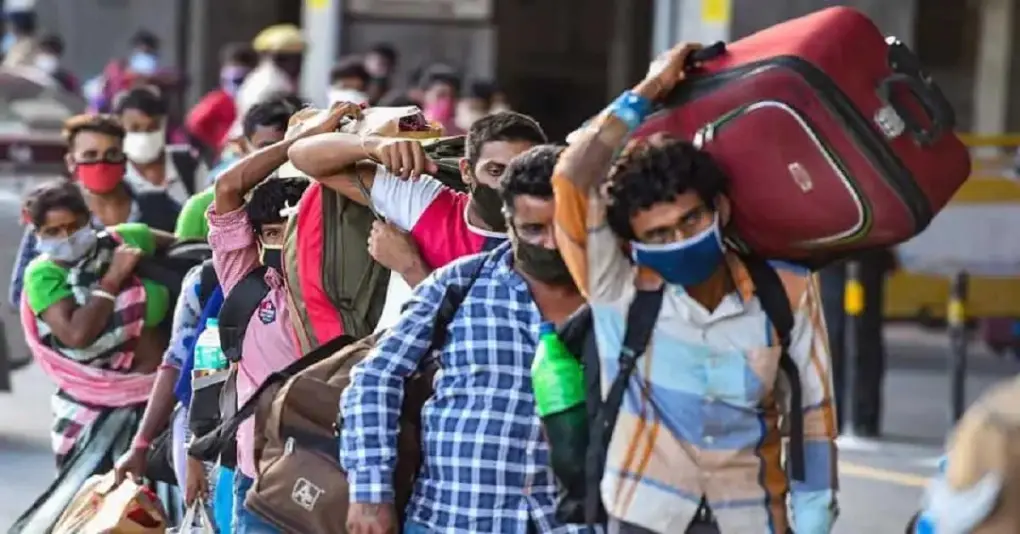
The lockdown completely left the village labour force unemployed. With no earnings, families were using their different resources to meet their day-to-day requirements, however soon they were trapped in new debts.
This note discusses the situation of inhabitants of a village during the lockdown imposed in the first wave of Covid-19. The observations are based on telephonic conversations in April 2020 with a sample of five persons of Charamula Village of Koraput district of Odisha. Around half of the population of the village belonging to Adivasi and Dalit communities. The village is situated in Narigaon Panchayat of Borigumma block of the district. The district is a part of the Kalahandi-Balangir-Koraput (KBK) region of the State. The region received a special grant from the Central Government until the financial year 2017-18 to fight poverty, illiteracy, malnutrition, hunger, and other related deprivations. Koraput district has a high concentration of population belonging to Scheduled Caste (SC) and Scheduled Tribes (STs).
Agriculture is an important source of livelihood for most of the families of the village. Major crops cultivated in the village are rice and sugarcane. A sizable number of farmers also cultivate vegetables, like brinjal, potato, tomato, onion, gourds of different kinds, chillies, pumpkins, etc. The primary source of water for agriculture during season is the river running nearby the village. Some of the farmers cultivate a second crop of rice by irrigating their land from the river. Sugarcane is grown on land around the banks of the river.
Local rice and sugarcane cultivation practices use manual labour to conduct most of the activities. Transplantation, weeding, application of fertilisers and pesticides, harvesting, and post-harvesting activities are mostly manually done by employing labourers. Small and marginal farmers including landless inhabitants of the village largely depend on these activities to support themselves. Women, in general, are engaged in transplantation, weeding, and harvesting of rice and sugarcane. Often women go as a group and bargain with a cultivator to do these activities on a contract. The lockdown announced by the Centre and State affected adversely to the members of the historically marginalised communities. Many Adivasi and Dalit communities in the region earn a living as farmers and by working on agricultural fields as labourers.
Due to the lockdown, the physical movement of farmers and labourers was restricted. Soon after the announcement of the lockdown, people who ventured out were brutally beaten up by police personnel. The location of the village made the situation even worse as police personnel passed through this village to go to some of the other villages under the purview of the police station. Villagers became afraid of going out, as some of their fellow villagers were severely beaten up. Consequently, there was no labour supply and denial of access to inputs, and market to sell agricultural produce at a fair price.
Farmers, who grew a second crop of rice in February 2020 after harvesting the first crop in December 2019, had standing crops in their fields which needed irrigation, weeding, application of fertilisers, and pest control measures. Due to the lockdown, there was no labour supply. Many of them had to undertake different required activities on their own or with support from family members. “It took us more than a week to remove grass from my rice field. If I had given it for a contract, they would have completed it in a day. I had no option”. They could not to irrigate their land as required. Many of them had to go to their fields before the sunrises and return before the police personnel could see them during the day. Due to the lockdown farmers could not buy fertilisers. They were also not able to go to their field as required. “We did everything on our own. We used to employ labour to prepare the field. I could not finish the field preparation for the second crop of sugarcane, everything was lost. I also had to go to the field to know about my crop. I could not go to the field as and when I wanted to.”
Farmers had to conduct certain operations secretly so that they could escape from the administration. They irrigated their fields before the sun rises and return home. During the lockdown farmers were uncertain about how to manage their crop operations. The nearby market for agricultural inputs like seeds, pesticide, and fertilisers is Kumuli which is around five kilometres away from the villagers. Few farmers from the village had some stock of fertilisers. Most of them did not have any pesticide. Further, they did not have access to any other nearby market except Borigumma, which was around 20 km away from the village. Farmers were afraid that non-availability of these inputs would affect their yields. “What shall we do? We have to wait and watch what the government decides. I don’t know how much yield I will get from my crop.” Vegetable growers were also affected as they did not get seeds. With no access to input market farmers had limited choices of crops to grow. “I am now planning to grow chillies as I do not have any other seeds.” Farmers who have their own seeds or who had bought seeds in advance are able to grow some vegetables.
Sale of agricultural product was also affected. Sugarcane farmers often make jaggery and sell to traders in Kumuli, Narigaon, and Charamula. Due to the lockdown, they did not get right price. “We are losing at least Rs.200 rupees per quintal of jaggery. The traders are buying at lesser than last year’s price. We have to sell to them as we cannot go to other markets.” Vegetable growers sold their products by going around their village. If the products were not sold, they had to reduce their products further. One of the respondents said “I used to sell my vegetables in the weekly market that is closed now. I can’t take my produce to Kumli or Borigumma. I have to sell it in my village and Narigaon. Whatever I am getting from the sale of the vegetables is less than my expectation. People in my village are known to me if they cannot pay for the vegetables, I give it on credit as I can’t take the vegetables back.”
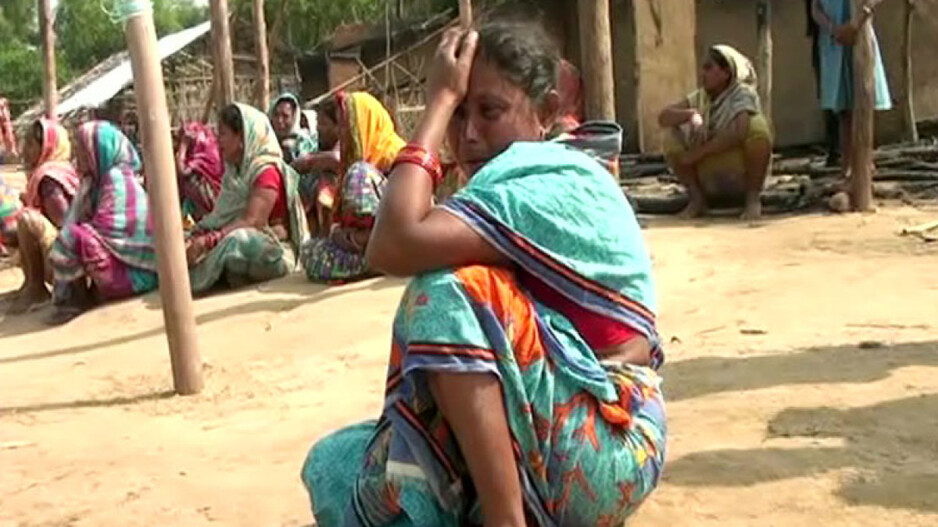
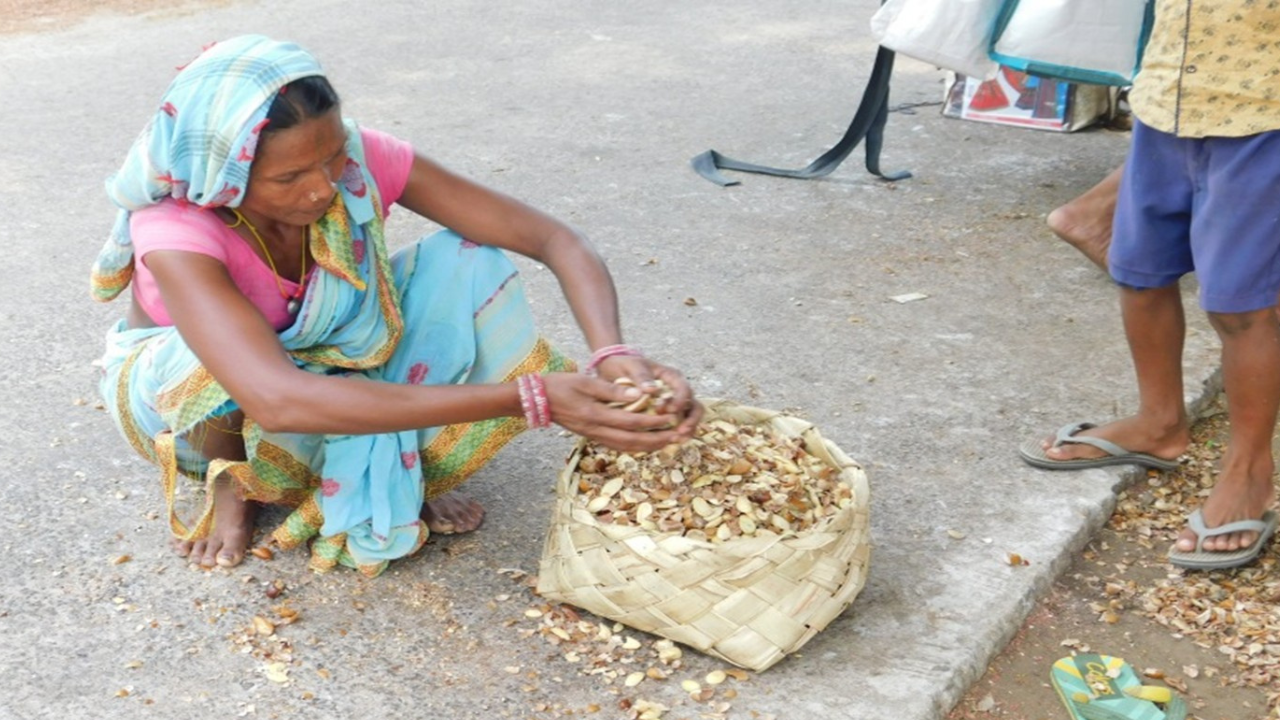
Apart from working on the agricultural field, women from SC and ST families used to work on various public and private construction worksites during this period. All the construction works were stopped due to the lockdown. Those who worked in MGNREGA schemes had not got their payments. With no employment availability families had to borrow money. A widow informed me that she had to borrow money at 10 per cent as interest in a month. As she did not have access to widow pension though she submitted my application more than a year back. During this period of the year, particularly older women from the village collect Kendu leaves to support them; however, they could not go out to do any other economic activities. They were afraid that police personnel would beat them. Many of them had no income during the time.
Prices of essential goods which villagers often bought on day-to-day basis went up. Respondent BP says, “Compared to last months, per kilo prices of potato, onion, cooking oil, lentils have gone up at least by Rs.10.” The villagers felt that food grain supply through PDS was insufficient. “Most of the villagers are involved in physical labour. We eat a lot of rice. Five kilos of rice won’t last even for a week. With no income and restriction imposed, we don’t know what to do.” Many who received the financial assistance of Rs. 1000 from the state government spent the entire amount within two to three days.
The lockdown completely left the village labour force unemployed. With no earnings, families were using their different resources to meet their day-to-day requirements, however soon they were trapped in new debts. The government support was inadequate. Within the first fifteen days of lockdown agricultural practices were affected. With no labour supply, farmers could not complete certain critical agricultural practices, like weeding, field preparation on time. Farmers lost access to input and markets. With no other income, many farmers were compelled to sell their produce at a lesser price. As most rural manual worker households depended on agriculture and nonfarm activities to support their families, lockdown has severely affected them. It is imperative the government should create more work opportunities in the locality, especially through national work guarantee act.
(Subhadarshee Nayak is a Research Scholar, Economic Analysis Unit, Indian Statistical Institute, Bangalore. He can be reached at sdnpintu@gmail.com)

Leave a Reply