
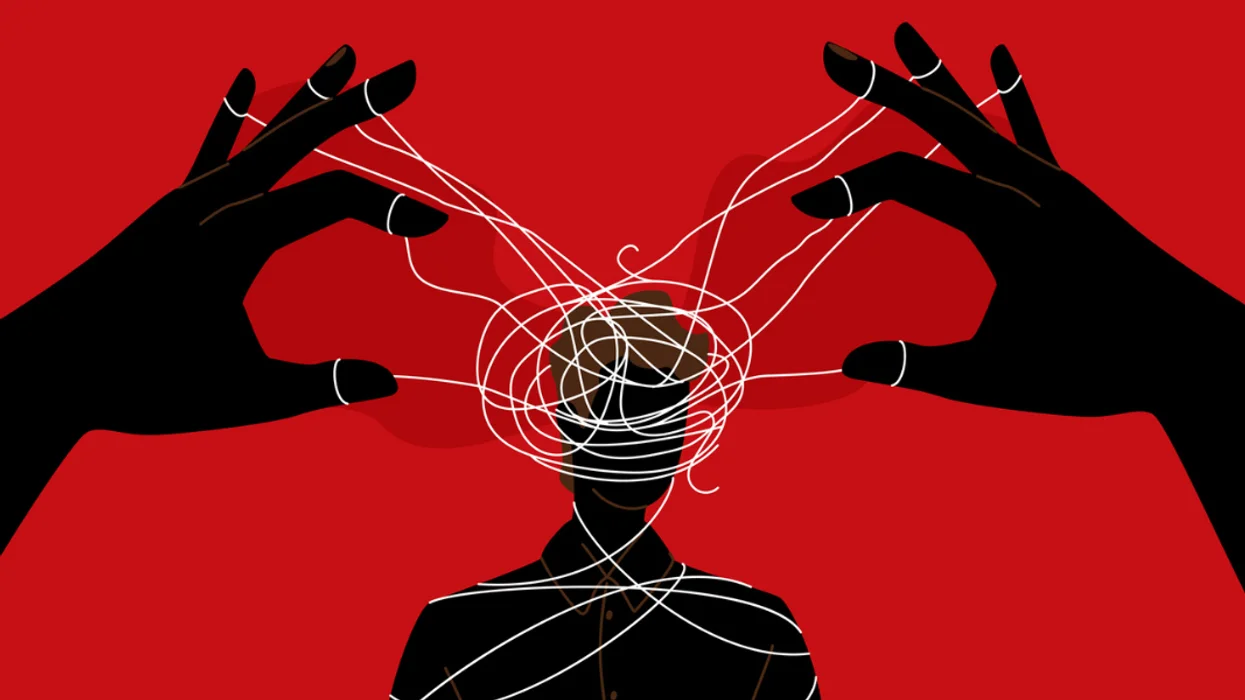
Media and Authoritarian Democracy
The manu-media is working round the clock, irrespective of which political party is in power, to distort and devalue indigenous culture and identity by superimposing Brahminical culture as the sole representative of the Indian culture.
It is widely believed that the media plays a crucial role in democracy by safeguarding the impartiality and autonomy of its core institutions—the legislative, executive, and judiciary. The media holds enormous power to shape and influence public perceptions of politics and policy. By providing critical information and diverse perspectives on political and economic issues affecting the general population, the media expands citizens’ agency. For this educating role, which is critical for any robust democracy, media is often considered as a ‘fourth pillar’ of democracy. However, this very ‘enabler’ of democracy can also be turned against it, wielded as a weapon for undermining democratic principles. Historically, capitalist and fascist forces have exploited the media to serve their interests, frequently at the expense of democracy. In every instance of the rise of authoritarian regimes, the media has played an insidious role. Through media propaganda – a form of persuasion used to advance a specific agenda by evoking emotional or obliging responses from the audience – hegemonic powers seek to control the masses. The consequences of such developments are disproportionately felt by dissenting voices, especially marginalised social and political groups. In this context, this article explores the role of the media in shaping the political economy and the rise of authoritarian democracy in India.
Media and Authoritarian Democracy
In the recent past, especially in the last decade, media has been seen playing an important role in the rise of the authoritarian democracy worldwide. Authoritarian democracy is a form of democracy in which a ruling minority seeks to represent the different interests of the society, often by subverting the real interest of the groups, it claims to represent. According to Maurice Barrès, a French Politician, “authoritarian democracy involved a spiritual connection between a leader of a nation and the nation’s people, and that true freedom did not arise from individual rights nor parliamentary restraints, but through ‘heroic leadership’ and ‘national power.” One can trace the rise of ‘heroic leadership’ and ‘hyper nationalism’ in the democratic nation-state like the USA, Brazil, Turkey, India, and so on. The mass media plays a vital role in foisting hyper-nationalism by engendering ‘consent of the governed’ and projecting someone as an infallible leader of the masses. This is often done in two ways: firstly, the media outlets are overtly regulated by bringing various regulations and legislation, and at times by censoring news and information before disseminating to the public; and secondly, by using the propaganda model of media, as Noam Chomsky describes it, which covertly manipulates the masses by ‘manufacturing consent’, making them believe that they are ‘acting on their own free will.’
In modern civilisation, however, using media to legitimate one’s power is not a very recent development. After the first world war, Adolf Hitler and Benito Mussolini used media propaganda to rise to power in Germany and Italy, respectively. Joseph Goebbels, the Minister of People’s Enlightenment and Propaganda, said that: we have made Reich [the Nazi Germany] by propaganda. Goebbels believed in the law of propaganda – repeat a lie often enough, and it becomes the truth – to obfuscate reality and spread antisemitic views in Germany. In other words, the ruling elites of Germany and Italy consolidated their control over the mindspace by controlling news media, art and information, especially the newly introduced medium of communication such as radio and film. This development resulted in the rise of fascism – widespread atrocities against the minorities, coercive suppression of political opponents and dissenting institutions. We see continuity, rather more sophistication in propaganda tactics, in the recent rise of authoritarian democracy worldwide.
Post-Truth Politics, Media and Democracy
The recent manifestation of the development mentioned above can be traced in the rise of ‘post-truth politics’, particularly in democratic nation-states. Post-truth politics, also known as post-reality or post-factual, is a new set of political culture that believes in “relating to or denoting circumstances in which objective facts are less influential in shaping public opinion than appeals to emotion and personal belief.” In the post-truth regime, the ruling dispensation aims to maintain political power by evoking emotion and repeated assertion of a talking point to which factual rebuttals are ignored. It is a situation where the truth and reason are considered of secondary importance relative to appeal to emotion. This is being done with the combination of ‘twenty-four-hour news cycles, false balance in news reporting, and the increasing ubiquity of social media and fake news websites.’ Post-truth politics has come to become a potential means for the vested interests to maintain power by controlling and manipulating the mindspace. In the global context, the overt prevalence of post-truth politics can be traced in the Brexit Referendum or the media coverage of Donald Trump in the Presidential election. The recent violent attack on the Capitol Building (USA Parliament) by Trump supporters carrying ‘Make America Great Again’ was one of the grim examples of post-truth politics and its impact on democracy. The moot question is, has India too slipped into post-truth politics?
Lokshahir Sambaji Bhagat, in one of his stage shows, asserted that this time India had taken her Prime Minister from the television. Bhagat emphasised the role of media in creating a public mood (hawa) for electing the Prime Minister. The media has always been a rallying point of the political campaign in India. However, it was not until the 2014 General Election that it has taken a different turn. Aside from being one of the costliest elections ($5 billion) in the world, second only to the USA presidential election ($7 billion), the election also showed the phenomenal rise of media propaganda. The campaign was run against the political and economic insecurities arising out of neo-liberal development in the country. The common people and the working class were made to believe that things are going to improve for them – Achhe Din Aane Wale Hain. The election was all about Sab Ka Saath, Sab Ka Vikash. The corporate media played a crucial role in shaping public opinion and influencing voter behavior, strategically steering the electorate toward a specific leader through targeted messaging, agenda-setting, and narrative framing. It was believed that around 500 crores were spent on electronic media, including Facebook, Twitter, YouTube etc., alone for election propaganda.
The 2014 election heralded a new post-truth politics in India. Since the landslide victory of the new government, we see an altogether different media clamour in justifying every government’s action. Most media houses were streamlined, and dissents were silenced through various coercive mechanisms – for example, asking to meet various compliances, intimidating critical voices through various state agencies, filing defamation suits against the whistleblowers, and most importantly, routine social media trail of dissenting journalists. There has been an unabated increase in media propaganda working round the clock to build narratives favouring the ruling dispensation. Most of the corporate media houses have become godi-media, the mouthpiece of the ruling dispensation. What is frightening for democracy like India is that this godi-media is creating a new political culture in which national debates are framed largely by appeals to Hindutva emotion, viz. Cow, Muslim, Pakistan, National Security, and so on. Such narratives are often framed either to dissuade people from the real issue or to cover up the policy failure of the government.
The godi-media is intensifying hyper-nationalism by stoking Hindu religious sentiments against Beef-Eaters, Muslims, Dalits, and lately Communists and Rationalists. One of the biggest adversaries of the post-truth regime is the democratic spaces like universities that foster critical and scientific temperament. Post-truth politics discourages critical engagement of its citizens in policy debates; instead, it criminalises those who are critical of the ruling party by calling them ‘anti-nationals.’ Through propaganda, the godi-media is trying hard to ‘depoliticise’ its citizenry by not allowing them space to participate in the issues of national importance. As Goebbels would have argued, this process has engendered Bhakt (an ardent follower of their master), who have been made to believe that they are acting on their own free will. The godi-media played an active role in justifying the government’s abrupt decision to implement whether it was Demonetisation, National Register of Citizens, Good and Service Tax, or the Lockdowns during the pandemic. Moreover, there has also been a conscious attempt to ‘criminalise’ and ‘othering’ certain sections of society, especially Dalits and Muslims, as they do not conform to cow nationalism. This process has created warmongering against these groups. The unchecked mob lynchings and atrocities against Dalits and Muslims highlight the role of propaganda in enabling the ruling powers to undermine democracy and maintain their dominance. According to the World without Border, India ranks 142 among 180 countries in the World Press Freedom Index, 2021. Has mainstream Indian media become indifferent to social injustice for the first time, or has it always been this way?
Whom Does the Media Serve in India?
Indian democracy has always been hostile to democratic institutions since its inception. India has historically been a caste-ridden society, grounded in a system of ‘graded inequality’, with an ascending scale of reverence and a descending scale of contempt. This system of inequality is deeply entrenched not only in the social sphere but also in the economic and political realms of the nation. Historically, media had never been free in any part of the world. In reality, freedom of the press meant, as Lenin had argued, freedom for the capitalist to publish and control the newspapers, a practice which in all countries, including even the freest, produced a corrupt press. In India, the media had always been in the clutches of hegemonic social groups (Brahmin/Savarna). The disadvantaged Bahujans (Shudra/Avarna) never had access to neither knowledge nor media. Since Savarnas are structurally inimical to Bahujans, their media had always relegated the interest of the latter to the secondary position. To the worst, it has often been seen doing negative campaigning against the interest of Bahujans, for instance, ridiculing reservation (affirmative action) for killing merit in the country and so on. Even Babasaheb Ambedkar had to contend with negative media campaigns orchestrated by M. K. Gandhi and the Congress Party during his struggle for social and political justice for the Bahujans.
Babasaheb Ambedkar many a time exposed the true characteristic of mainstream media of his time. In many instances, Babasaheb unmasked the caste character of the press. For example, in the very first editorial of Mooknayak, Babasaheb criticized the mainstream media for failing to represent the interests of all social groups. He wrote: if we look carefully at the newspaper’s content, we can see that mostly it safeguards the interest of a specific caste. They do not care about any other castes. Not only this, sometimes its contents are meant to harm them (V K Wasnik, 2019: 34: Mooknayak). While highlighting the dominance of Congress and Brahmins in media, Ambedkar wrote: [Untouchables] have no press of their own, and the doors of Congress press are shut for them. They have taken a vow not to give even an iota of publicity to the untouchables. … India’s entire press is caught in the stranglehold of Tamil Brahmin, and they are completely loyal to the Congress. The apathy of the Congress Press, he argued, was nothing but a ‘reflex of the hatred of the Hindus for the Untouchables.’
Before attempting to answer the question of whom the media serves, it would be helpful to first consider who controls the media in India. One does not see any change in the social composition of Indian media even in the twenty-first century. In their survey, the Media Studies Group (2006) found that India’s national media is highly exclusionary and lacks social diversity. Savarna men dominate the media; they constitute more than two-thirds (71%) of key decision-makers. The survey shows that Savarna makes 86% of key decision-makers in media. The representation of Dalit and Adivasi was nil, whereas OBC and Muslim constituted only 4% and 3%, respectively. In 2019, Oxfam, in its study – Who Tells our Story Matters: Representation of Marginalised Caste Groups in Newsrooms – found a similar trend. According to it, out of 121 newsroom leadership positions across the newspapers, TV news channels, news websites, and magazines, 106 (88%) were occupied by Savarna. Whereas three out of four TV anchors of flagship debates were Savarna and none from the Bahujans (SC/ST/OBC). The survey also showed that most panellists, opinion makers, were from the Savarna category. This shows the continuing dominance of Savarna in newsrooms and their control over the narratives. That is why we see the complete apathy of media towards the cause of Bahujans – whether it is the issue of reservation, farmers, migration, identity-based NRC etc. The caste characteristic of mainstream media shows that the country is facing challenges from not only godi-media but also manu-media, which aspires to create Brahminical cultural hegemony over Bahujans.
The Subaltern Media and Democracy
The new information communication technology such as Facebook, Twitter, YouTube etc. has widened the space for the masses to connect, exchange and organise themselves for any collective goals. In the recent past, digital media has been seen playing an important role in popular uprisings against the corrupt and authoritarian regimes worldwide. Nonetheless, digital media has also emerged as a potential tool for vested interests to control public discourse. Such strategies can undermine the democratic spaces in media. Moreover, they have the potential to further subjugate marginalised social groups by distorting reality. It is a well-established fact that in India, not only is the media but all axes of power – social, economic, and political – are heavily concentrated in the hands of the Savarna. They possess the power to subvert democratic institutions and systematically impose cultural hegemony over marginalised social groups. For this reason, it is crucial that the Bahujans not only resist political tyranny but also challenge the cultural subjugation imposed by hegemonic power.
In India, many independent press outlets, particularly those that are crowd-funded – such as The Wire, The Print, AltNews, Scroll, Quint, Newslaundry, and NewsClick – are working to not only expose fake news and policy failures but also challenge the overarching narratives of corporate and pro-government media. However, the task before the subaltern press like Forward Press, Dalit Dastak, Disom Khobor, Johar Sahiya, Mooknayak and Dalit Voice (now defunct) is enormous. They are not only fighting political tyranny but cultural tyranny as well. The manu-media is working round the clock, irrespective of which political party is in power, to distort and devalue indigenous culture and identity by superimposing Brahminical culture as the sole representative of the Indian culture. As a result, it has become increasingly important for Bahujan to engage with the media as a tool to resist both post-truth politics and cultural hegemony. Throughout his struggle against injustice, Babasaheb emphasised the importance of the media in politicising the masses. Like Lenin, Ambedkar also believed that ‘the press should be not only a collective propagandist and a collective agitator, but also a collective organiser of the masses.’ Therefore, in these challenging times, subaltern media can play a crucial role in not only safeguarding India’s political democracy but also in democratising society as a whole. This is where Indigenous Voice must position itself.

Leave a Reply